In today’s digital landscape, technology is the backbone of every successful organization.
From daily operations to customer engagement, a robust business IT foundation is non-negotiable for efficiency, security, and scalability. This guide details the core components, strategic advantages, and evolving trends of business information technology.
From daily operations to customer engagement, a robust business IT foundation is non-negotiable for efficiency, security, and scalability. This guide details the core components, strategic advantages, and evolving trends of business information technology.
What Is Business Information Technology (Business IT)?
Business Information Technology is the integrated framework of hardware, software, networks, and services — deployed and managed to achieve specific business objectives. It transcends general “IT” by aligning technology directly with business strategy, processes, and goals. The focus is on practical application: leveraging technology to streamline workflows, safeguard assets, enable data-driven decisions, and support seamless growth.
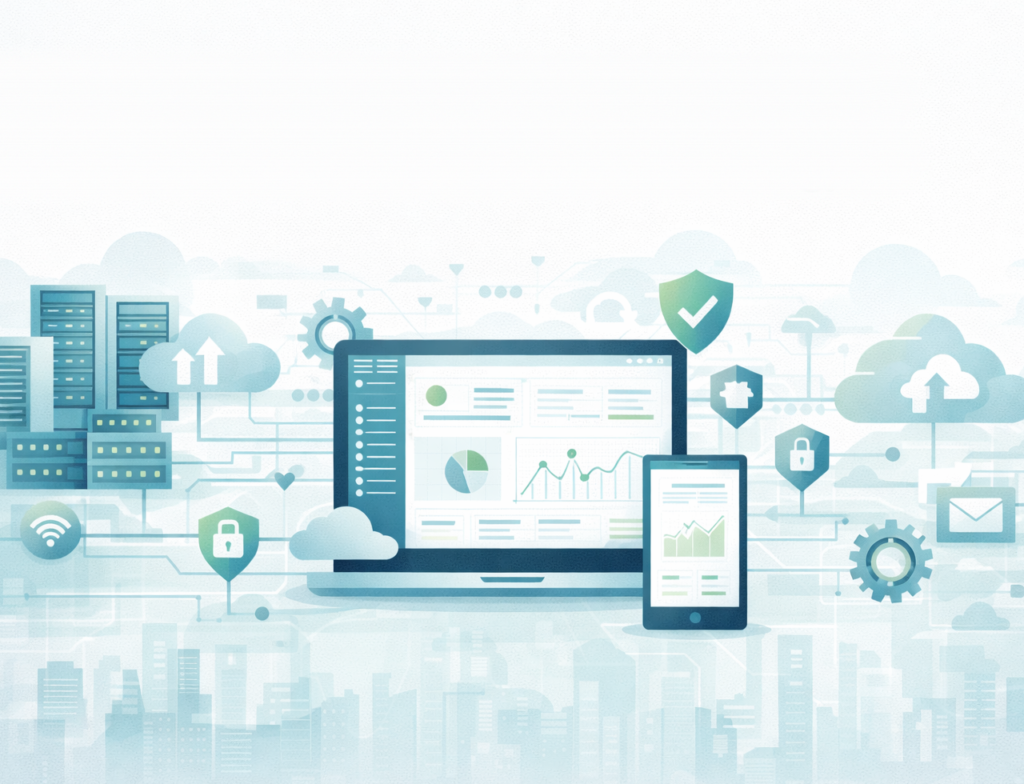
A comprehensive business IT stack typically includes:
Network Infrastructure: Reliable, secure wired and wireless connectivity.
Communication & Collaboration Tools: Unified platforms for voice, video, chat, and file sharing.
Data Management: Secure storage, robust backup, and disaster recovery solutions.
Cybersecurity: Layered defenses (firewalls, EDR, MFA, zero trust frameworks).
Cloud Services & SaaS: Scalable applications and infrastructure (e.g., CRM, cloud storage).
Hardware Assets: Servers, end-user devices, and specialized equipment (e.g., PoS systems).
IT Support & Monitoring: Proactive maintenance, help desk services, and 24/7 system oversight.
Communication & Collaboration Tools: Unified platforms for voice, video, chat, and file sharing.
Data Management: Secure storage, robust backup, and disaster recovery solutions.
Cybersecurity: Layered defenses (firewalls, EDR, MFA, zero trust frameworks).
Cloud Services & SaaS: Scalable applications and infrastructure (e.g., CRM, cloud storage).
Hardware Assets: Servers, end-user devices, and specialized equipment (e.g., PoS systems).
IT Support & Monitoring: Proactive maintenance, help desk services, and 24/7 system oversight.
The Strategic Value of Business Technology
Enhanced Operational Efficiency
Automate repetitive tasks and optimize workflows, freeing your team to focus on high-value initiatives.
Improved Collaboration & Productivity
Break down geographical barriers with integrated tools that enable seamless teamwork across departments and time zones.
Informed, Data-Driven Decision Making
Utilize analytics and reporting tools to transform raw data into actionable business intelligence.
Robust Security & Compliance
Protect sensitive company and customer data from evolving threats while simplifying adherence to regulatory standards.
Ensured Business Continuity
Protect sensitive company and customer data from evolving threats while simplifying adherence to regulatory standards.
Core Components of Modern Business IT Solutions
A cohesive business IT strategy is built on several interdependent pillars:
Networking & Connectivity
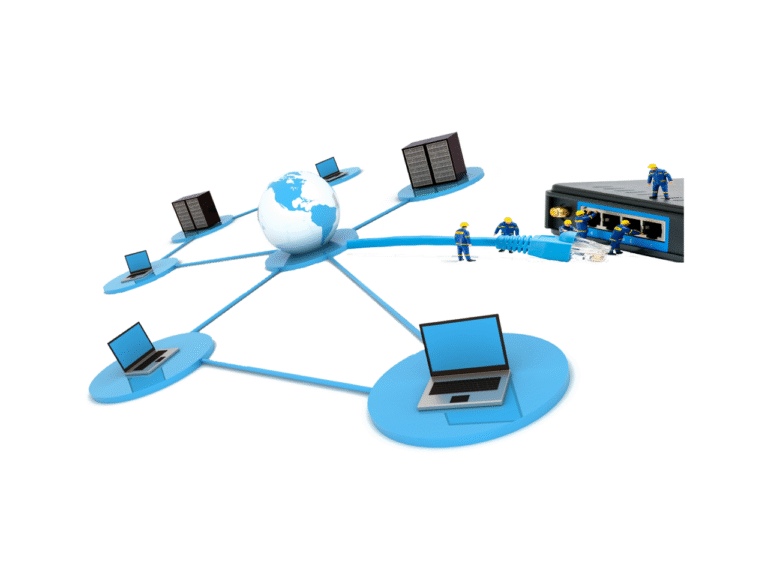
The foundational backbone. Business-grade routers, switches, and firewalls ensure fast, secure, and reliable connections for all users and devices, directly impacting overall performance.
Cloud-First Services
Adopting cloud infrastructure and SaaS applications offers agility, reduces capital expenditure, and inherently supports remote and hybrid work models, forming the core of agile modern IT.
Multi-Layered Security
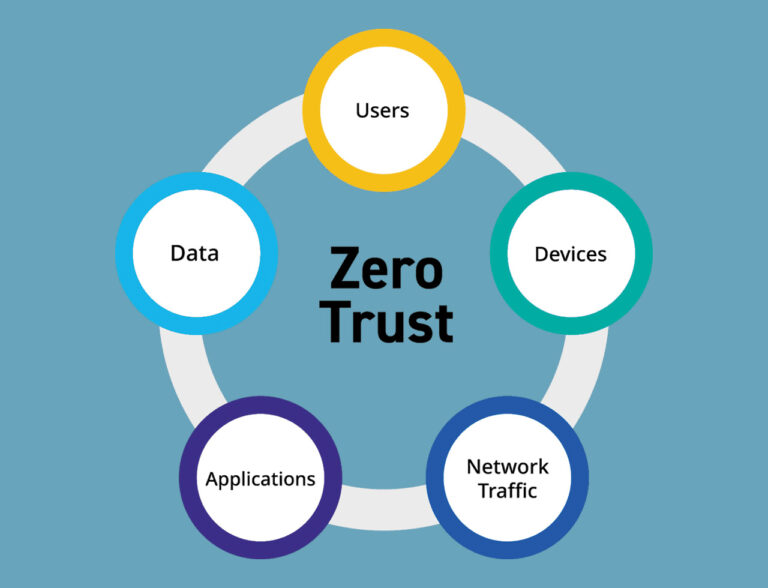
A proactive defense-in-depth approach is critical. This combines advanced tools (antivirus, EDR, firewalls) with strategic frameworks like Zero Trust, which verifies every user and device continuously.
Proactive IT Support & Monitoring
Managed IT services provide expert oversight, identifying and resolving potential network or security issues before they impact business operations, drastically reducing costly downtime.
Navigating IT in Multi-Site & Scalable Environments
Expanding to multiple locations introduces complex challenges: standardizing technology, managing disparate vendors, ensuring uniform security policies, and providing timely on-site support.
Success requires:
Centralized oversight and management.
Standardized network and security architectures across all sites.
Scalable support models, including remote management and coordinated field service.
Unified vendor and policy management to ensure consistency, security, and performance at every location.
Success requires:
Centralized oversight and management.
Standardized network and security architectures across all sites.
Scalable support models, including remote management and coordinated field service.
Unified vendor and policy management to ensure consistency, security, and performance at every location.
7 Key Business Technology Trends Shaping the Future
Stay ahead by integrating these evolving trends into your IT roadmap:
Cloud-First & Hybrid Cloud Strategies: Dominant approach for scalability and flexibility, with hybrid models balancing public cloud benefits with specific private infrastructure needs.
AI & Intelligent Automation: Automating complex back-office tasks and supercharging cybersecurity with predictive threat detection and response.
Zero Trust Security Framework: Moving beyond “trust but verify” to “never trust, always verify,” essential for securing distributed networks and remote access.
Edge Computing: Processing data closer to its source (e.g., IoT devices) to reduce latency and bandwidth use, crucial for real-time analytics and smart operations.
Sustainable IT Practices: Prioritizing energy-efficient infrastructure and eco-conscious vendors to reduce environmental impact and operational costs, while boosting ESG scores.
Unified Collaboration Platforms: Integrating communication channels (voice, video, messaging) into single, intuitive platforms to reduce context-switching and enhance team productivity.
IT/OT Convergence: The merging of Information Technology with Operational Technology (e.g., in manufacturing) unlocks efficiency but requires integrated security strategies for critical infrastructure.
Cloud-First & Hybrid Cloud Strategies: Dominant approach for scalability and flexibility, with hybrid models balancing public cloud benefits with specific private infrastructure needs.
AI & Intelligent Automation: Automating complex back-office tasks and supercharging cybersecurity with predictive threat detection and response.
Zero Trust Security Framework: Moving beyond “trust but verify” to “never trust, always verify,” essential for securing distributed networks and remote access.
Edge Computing: Processing data closer to its source (e.g., IoT devices) to reduce latency and bandwidth use, crucial for real-time analytics and smart operations.
Sustainable IT Practices: Prioritizing energy-efficient infrastructure and eco-conscious vendors to reduce environmental impact and operational costs, while boosting ESG scores.
Unified Collaboration Platforms: Integrating communication channels (voice, video, messaging) into single, intuitive platforms to reduce context-switching and enhance team productivity.
IT/OT Convergence: The merging of Information Technology with Operational Technology (e.g., in manufacturing) unlocks efficiency but requires integrated security strategies for critical infrastructure.