For years, enterprise network innovation focused heavily on Artificial Intelligence—primarily static alerts, anomaly flags, and log summaries. However, as organizations navigate the IT complexities of 2026, a structural shift is occurring: networks are transitioning from being actively managed to being intelligently orchestrated.
Having an advanced AI model is no longer a sustainable competitive advantage. The real advantage lies in the underlying infrastructure that powers it.
To successfully leverage Agentic AI, enterprise technology leaders must first establish a unified observability foundation. You cannot automate what you do not understand, and you cannot orchestrate what you cannot see.
Having an advanced AI model is no longer a sustainable competitive advantage. The real advantage lies in the underlying infrastructure that powers it.
To successfully leverage Agentic AI, enterprise technology leaders must first establish a unified observability foundation. You cannot automate what you do not understand, and you cannot orchestrate what you cannot see.
Despite these projections, an execution gap persists. Most IT engineering teams remain trapped in reactive troubleshooting because their telemetry data is siloed, topology visibility is incomplete, and alerts lack business context.
Platforms like OpManager bridge this gap by turning disparate network data into actionable, orchestrated intelligence.
Platforms like OpManager bridge this gap by turning disparate network data into actionable, orchestrated intelligence.
Why Legacy “Up/Down” Monitoring Is Obsolete
Traditional network monitoring relied on survival metrics: uptime, CPU utilization, and basic interface status. While still fundamental, these metrics fail to support modern enterprise architectures driven by:
Modern downtime rarely stems from isolated hardware failures. Instead, outages originate from dynamic path anomalies, cloud performance fluctuations, configuration drift, and cascading multi-system dependencies.
The Modern IT Shift: Executive leaders no longer ask, “Is the server online?”
They ask: “Why is the core enterprise application experiencing latency? Where is the constraint? How will this impact operations over the next 15 minutes?”
Core Trends Shaping 2026 Network Operations
Trend 1: Agentic AI Amplifies—Not Replaces—Human Expertise
Agentic AI has transitioned from experimental pilots to core production workflows. However, effective AIOps depends on high-quality, contextualized data inputs rather than generative language queries alone.
Algorithms fail when fed siloed metrics and incomplete topology data. Platforms like OpManager prioritize a unified Data Foundation to eliminate “garbage in, garbage out” vulnerabilities before deploying automated agents.
Algorithms fail when fed siloed metrics and incomplete topology data. Platforms like OpManager prioritize a unified Data Foundation to eliminate “garbage in, garbage out” vulnerabilities before deploying automated agents.
Automating Discovery & Dynamic Topology Mapping
With dynamic cloud instances, distributed remote sites, and ephemeral edge devices, manual documentation is a persistent operational risk. OpManager automates visibility through:
This level of insight transforms incident response. Instead of calculating blast radiuses manually, engineering teams can instantly identify affected hardware and isolate dependent critical business services.
Trend 2: Predictive AIOps & Alert Fatigue Reduction
In 2026, the strategic value of AIOps lies in root-cause prediction rather than high-volume ticket generation. OpManager shifts operations from passive notification to predictive resolution through:
Trend 3: Unifying Siloed Multi-Cloud & Hybrid Environments
The legacy approach of deploying standalone monitoring tools for logs, network infrastructure, servers, and cloud resources creates data swamps and degrades MTTR. Modern enterprise resilience requires unified infrastructure cohesion.
OpManager provides single-pane-of-glass management through:
With workloads distributed across on-premises data centers, public clouds (AWS, Azure, GCP), and edge nodes, a single pane of glass is non-negotiable.
OpManager unifies these silos by offering:
OpManager unifies these silos by offering:
Trend 4: Proactive Management for SD-WAN & SASE Architectures
With over 80% of enterprises using SD-WAN and SASE as standard network architecture, the enterprise perimeter is fully decentralized.
Device Monitoring & Proactive Capacity Planning
To maintain strict performance SLAs, OpManager extends granular device and link monitoring across all edge points:
This shifts the team’s objective from “restoring service” to “guaranteeing performance.“
Trend 5: Business-Centric Visualization & Spatial Dashboards
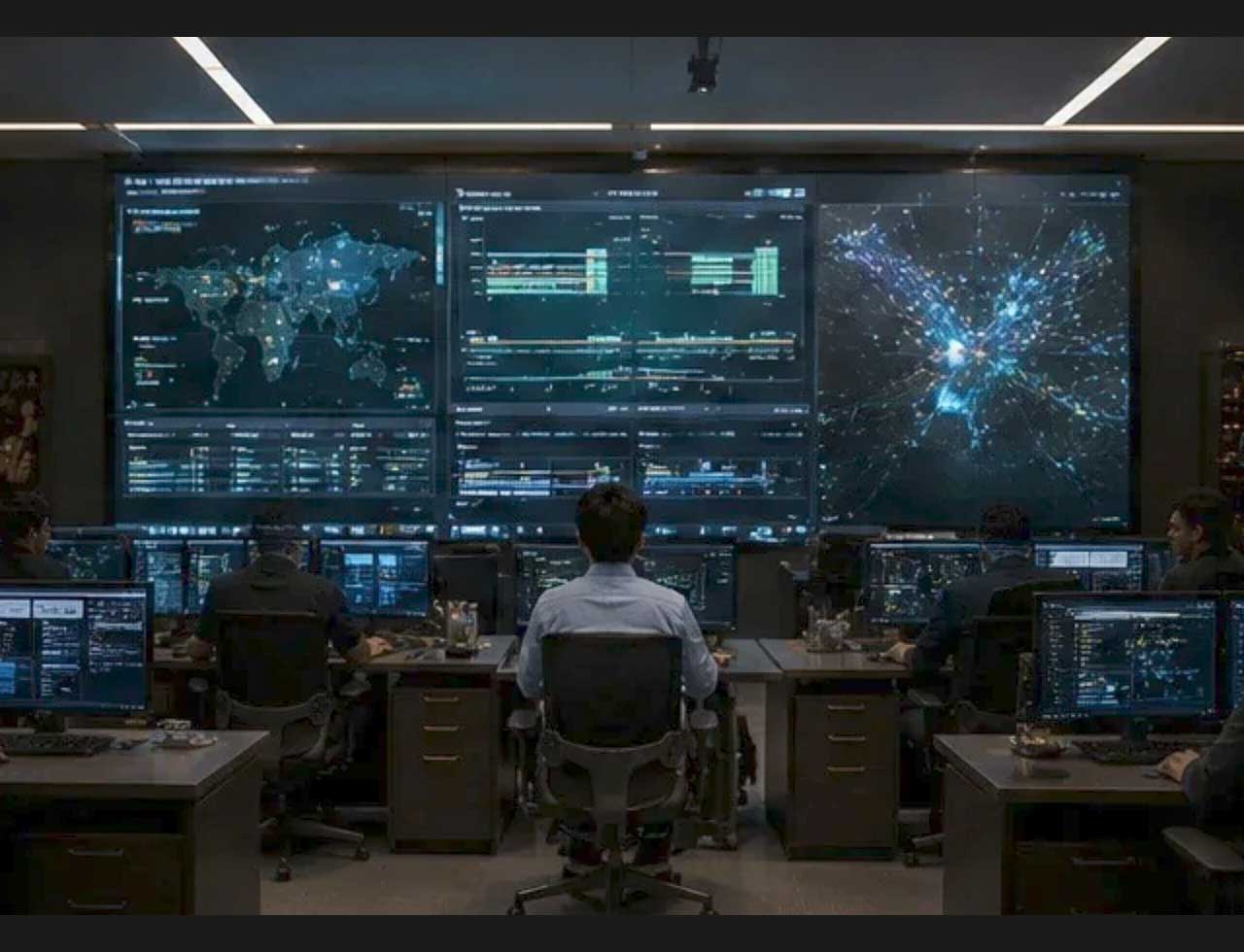
Dashboards in 2026 serve as strategic operational command centers rather than static displays. OpManager translates raw infrastructure metrics into business insights:
Custom Dashboards for Business-Focused Decision-Making
Complex environments require clarity. OpManager provides:
Strategic Summary: Build the Foundation Before the Agent
The enterprise narrative for 2026 is clear: Observability must precede automation. Market leaders are not defined by the standalone AI tools they purchase, but by the unified data infrastructure they build to power intelligent operations.
By consolidating network discovery, real-time analytics, and predictive topology mapping, enterprise IT transitions from reactive firefighting to deterministic, orchestrated performance.
By consolidating network discovery, real-time analytics, and predictive topology mapping, enterprise IT transitions from reactive firefighting to deterministic, orchestrated performance.
Modernize Your Network Infrastructure with GOIP
Is your network infrastructure ready for the demands of Agentic AI and multi-cloud orchestration?
With GOIP to deploy OpManager—the enterprise platform designed to elevate your network operations from reactive management to predictive orchestration.
With GOIP to deploy OpManager—the enterprise platform designed to elevate your network operations from reactive management to predictive orchestration.